
Oklahoma District Court Structure
Oklahoma runs one set of trial courts called District Courts, and each county has one. The state does not use a separate county court, and it does not number its trial courts. That keeps the layout simple. A single District Court serves Pittsburg County, and its judges hear the full range of cases that arise here. The Oklahoma District Courts state page explains that district judges decide both civil and criminal matters.
Because the court is so broad, the file you need could be a divorce, a felony, a will, or a small money claim. All of them open in the same District Court, and all of them sit with the same local record office. The court leans on presiding judges to help run the trial system across the region. Work gets split into divisions for civil, criminal, probate, and family cases, yet the court itself stays whole. One bench, one clerk's office, many kinds of cases.
Pittsburg County District Court Contacts
The District Court is staffed by several judges plus the offices that move cases along. A county phone list names the lines for each judge, the prosecutor, and the drug-court program. The table below pulls those numbers together so a caller can reach the right desk on the first try. Roles are described in plain terms, since Oklahoma assigns dockets across district, associate, and special judges.
| Office | Role | Phone |
|---|---|---|
| District Judge | Presides over felony cases and major civil matters | 918-423-6866 |
| Associate District Judge | Hears assigned civil, criminal, and docket matters | 918-423-6479 |
| Special Judge Beare | Handles assigned dockets and hearings | 918-423-6651 |
| Special Judge McLaughlin | Handles assigned dockets and hearings | 918-423-7157 |
| District Attorney | Files and prosecutes criminal charges | 918-423-1324 |
| Drug Court | Problem-solving court program line | 918-423-7323 |
Judges decide cases, but they do not keep the files. That job falls to the Court Clerk, who records, files, and stores the permanent records of all District Court proceedings. The county's official Court Clerk page lists the divisions the office serves and the contact details. The courthouse address and the clerk's records counter are shown below.
Pittsburg County Courthouse / Court Clerk
115 E Carl Albert Pkwy #1A
McAlester, OK 74501
Mailing: PO Box 460, McAlester, OK 74502
Phone: 918-423-4859
Hours: Monday to Friday, 8:00 to 4:30
Pittsburg County in Judicial District 18
Pittsburg County sits in Oklahoma's Judicial District 18. Official Oklahoma.gov material that maps parole-board judicial districts places the county in District #18 and names Judge Mindy Beare in that context. The district covers the local trial bench and the judges assigned to hear cases filed in McAlester. A district court file from this county carries the heading "In the District Court in and for Pittsburg County, Oklahoma."
The same judicial district links to the prosecutor's office that handles criminal matters here. The District 18 District Attorney serves both Pittsburg and Haskell counties. That office files charges, while the court decides them. The split matters when you read a record, because the prosecutor, the judge, and the clerk each own a different part of the case.
Note: Judge assignments can shift, so confirm the current judge for a specific case through the OSCN docket before relying on any single roster.
Civil and Criminal Jurisdiction in Pittsburg County
The District Court holds broad power over cases that start in the county. On the civil side, it hears money claims, debt suits, injunctions, judgments, liens, garnishments, and name changes. On the criminal side, it hears felony and misdemeanor charges, sets bonds, issues warrants, and enters sentences. Traffic citations written by the Oklahoma Highway Patrol and the Pittsburg County Sheriff also land here, not in a city court.
The clerk sorts these filings by case type, and each type uses its own prefix. That code tells you at a glance what kind of case you are reading. The common ones in Pittsburg County include the following.
- CF and CM: felony and misdemeanor criminal cases.
- CV and SC: civil suits and small claims.
- FD: family and domestic-relations cases such as divorce.
- PB: probate, estate, and guardianship matters.
- PO: victim protective orders.
- TR: District Court traffic citations.
Searches at the state portals use these same prefixes. A reader can browse the broader record set in Pittsburg County court records and then narrow by prefix, party, or filing date.
Probate and Family Divisions of the District Court
Probate and family cases are not separate courts in Oklahoma. They are divisions of the same District Court, and the Court Clerk handles their files. The probate division covers wills, estate administration, guardianships, conservatorships, and trusts. The family division covers divorce, paternity, child support, custody, and protective orders. A small estate may sometimes move through an affidavit process instead of a full probate case.
These matters carry their own terms, and a few come up again and again in the file.
- Testator
- A person who leaves a valid will.
- Executor
- The person named to carry out the will.
- Intestate
- Dying without a valid will.
- Guardianship
- A court arrangement to care for a minor or an adult who cannot manage alone.
- Petitioner
- The party who starts a family or probate case.
Some of these files carry tight access rules. Guardianship details, adoption, and mental health proceedings can be restricted, so the public view may show less than a routine civil case.
District Court vs Municipal Court vs Tribal Court
The District Court is not the only court that meets in the area. McAlester Municipal Court handles city ordinance and municipal traffic cases, and those files stay with the city, not the county Court Clerk. Tribal courts hear matters tied to tribal jurisdiction, which is common in eastern Oklahoma. The table below shows how the three differ and where to look for each.
| District Court | Municipal Court | Tribal Court | |
|---|---|---|---|
| Case types | Civil, criminal, probate, family, small claims, OHP and county traffic | City ordinance and municipal traffic citations | Matters under tribal jurisdiction |
| Jurisdiction | County-wide, the state's main trial court | Inside city limits, here mainly McAlester | Tribal members and Indian Country matters |
| Where to search or contact | OSCN, ODCR, or the Court Clerk at 918-423-4859 | McAlester Municipal Court, 301 E Carl Albert Pkwy / PO Box 578, 918-421-4939 | The specific tribal court that holds the case |
A common mistake is to search the District Court for a city ticket. McAlester citations do not appear in the District Court traffic search, so a missed parking or speeding case may sit in the municipal system instead. When in doubt, match the citing agency to the right court before you search.
How a Case Moves Through the Pittsburg County System
A case follows a set path once it opens, and the docket marks each step with a date. Criminal and civil cases travel different routes, and appeals split by case type at the end. The two flows below show the usual order from start to final review.
Criminal flow: Arrest › Initial Appearance › Preliminary Hearing › Arraignment › Pretrial › Plea or Trial › Sentencing › Appeal to the Court of Criminal Appeals
Civil flow: Petition Filed › Answer › Discovery › Pretrial › Trial › Judgment › Appeal to the Supreme Court or Court of Civil Appeals
The clerk logs every move on the appearance docket. That running list lets a reader trace a case from the first filing to the last order. Each line shows a date, a code, and a short note, so the file reads like a timeline of what the court did and when.
Specialty Courts in Pittsburg County
Pittsburg County runs a Drug Court, a problem-solving program that pairs court oversight with treatment. A county phone list shows the Drug Court line at 918-423-7323. Entry runs through the court, the prosecutor, and defense counsel, who weigh eligibility case by case. Detailed rules, program length, and graduation terms are not published in the official local sources, so a candidate should ask the court directly.
Timing for early court steps is also local. The Sheriff's court page lists Tribal Court at 1 PM Monday through Friday and District Court initial appearances at 3 PM Monday through Friday. These times reflect how custody cases get processed soon after arrest. Holidays can shift the schedule.
Note: The county lists a Drug Court contact, but eligibility and program details are set through the court process rather than published online.
Appeals from Pittsburg County District Court
An appeal does not stay in the District Court. It moves up, and the destination depends on the kind of case. Civil appeals go to the Oklahoma Supreme Court, which may keep a case or send it to the Oklahoma Court of Civil Appeals. Criminal appeals follow a separate track to the Oklahoma Court of Criminal Appeals. That split is unusual, since most states use one top court for both.
The District Court record forms the base for any appeal. The higher court reviews what the trial court did rather than holding a new trial. Because of that, the clerk's file, the transcript, and the docket entries all matter when a party asks a higher court to take a second look.
Federal Court Boundary for Pittsburg County
Not every case from Pittsburg County belongs to the state District Court. Federal cases follow a wholly separate system, and the county Court Clerk does not hold them. Pittsburg County falls in the U.S. District Court for the Eastern District of Oklahoma, which sits in Muskogee. Its court-info page describes the district and its place in the federal system, as shown on the official Eastern District court-info page.
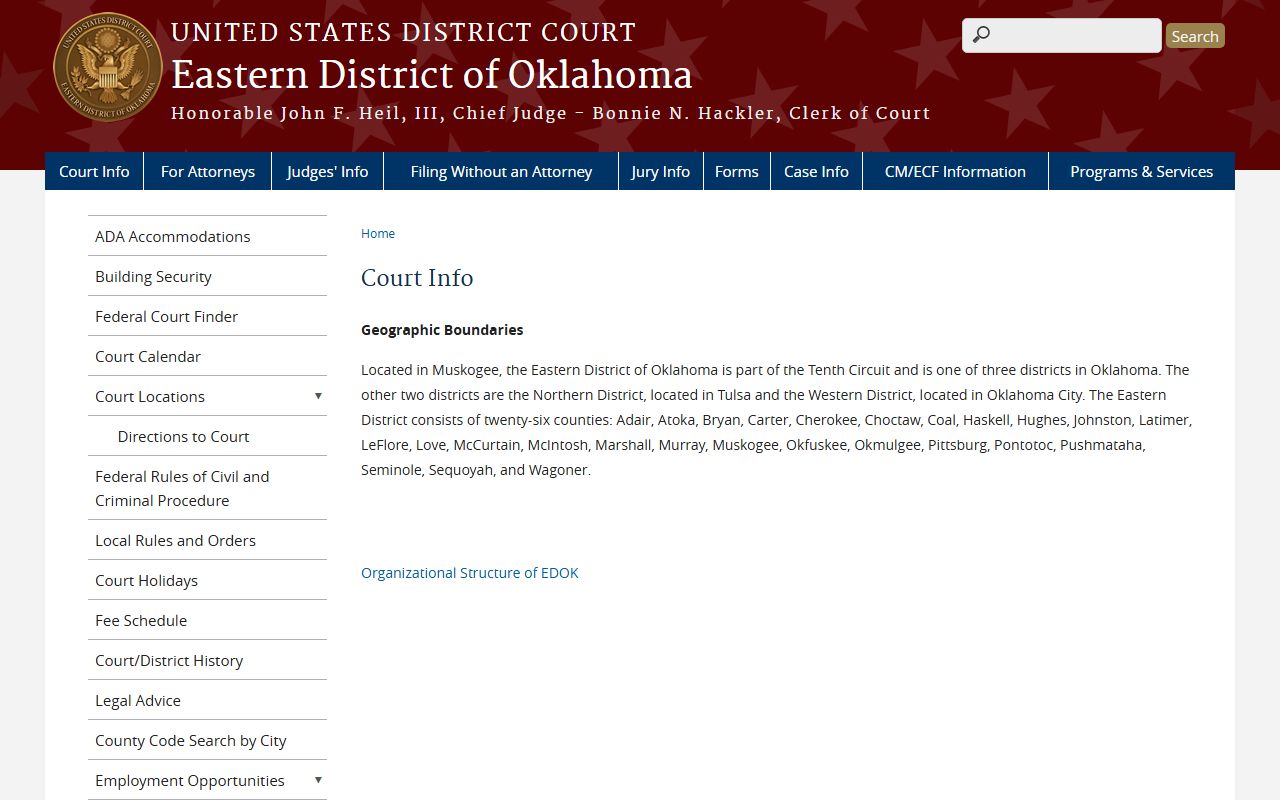
That page confirms the Eastern District is one of the state's three federal districts and that it belongs to the Tenth Circuit. Federal matters include federal crimes, civil rights suits, cases where the United States is a party, and many Indian Country prosecutions tied to the region.
Federal case files are not searched on OSCN or ODCR. Attorneys and the public file and read them through the court's electronic system, reached at the Eastern District CM/ECF login.
CM/ECF is the filing side of the federal record system. To read documents and dockets, most users turn to the national public-access service instead.
That service is PACER, the federal courts' record portal, available at the PACER access site.
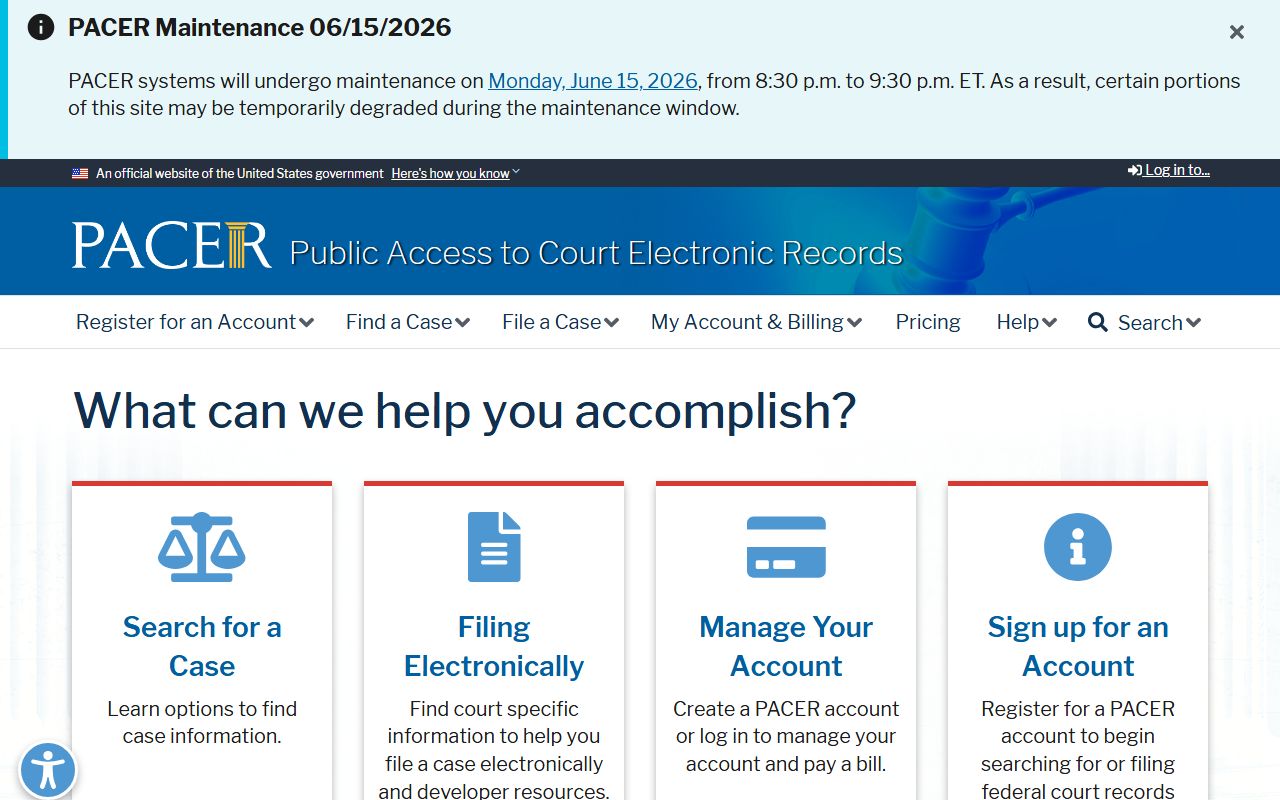
PACER reaches federal district, appellate, and bankruptcy dockets across the country. A user sets up an account, searches by party or case number, and pays per-page fees to view documents.
Federal appeals from the Eastern District move to the Tenth Circuit, whose clerk's office is in Denver. The court explains its role at the Tenth Circuit website.
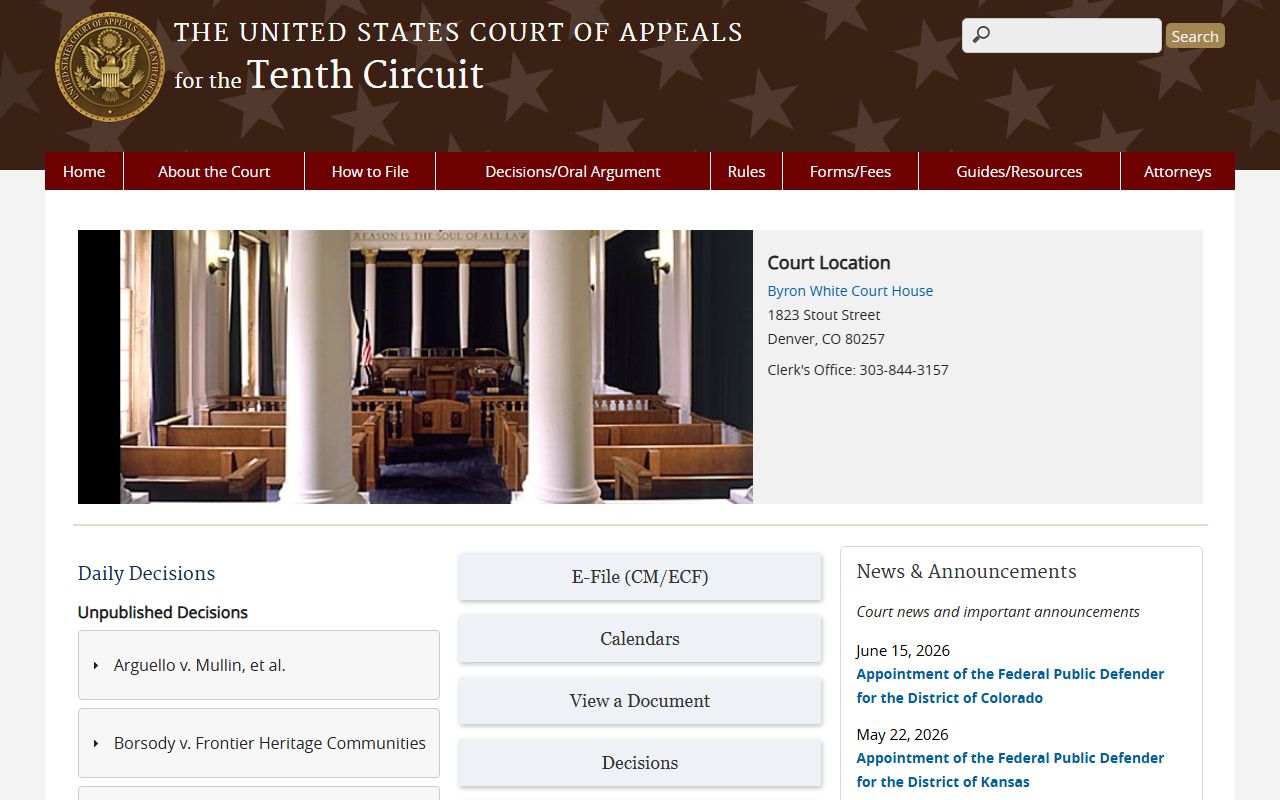
The Tenth Circuit reviews federal trial-court decisions for several states, Oklahoma among them. It plays the federal-side role that the state appellate courts play for District Court cases.
The prosecutor for federal crimes here is the U.S. Attorney for the Eastern District of Oklahoma. The office describes its work at the U.S. Attorney EDOK page.
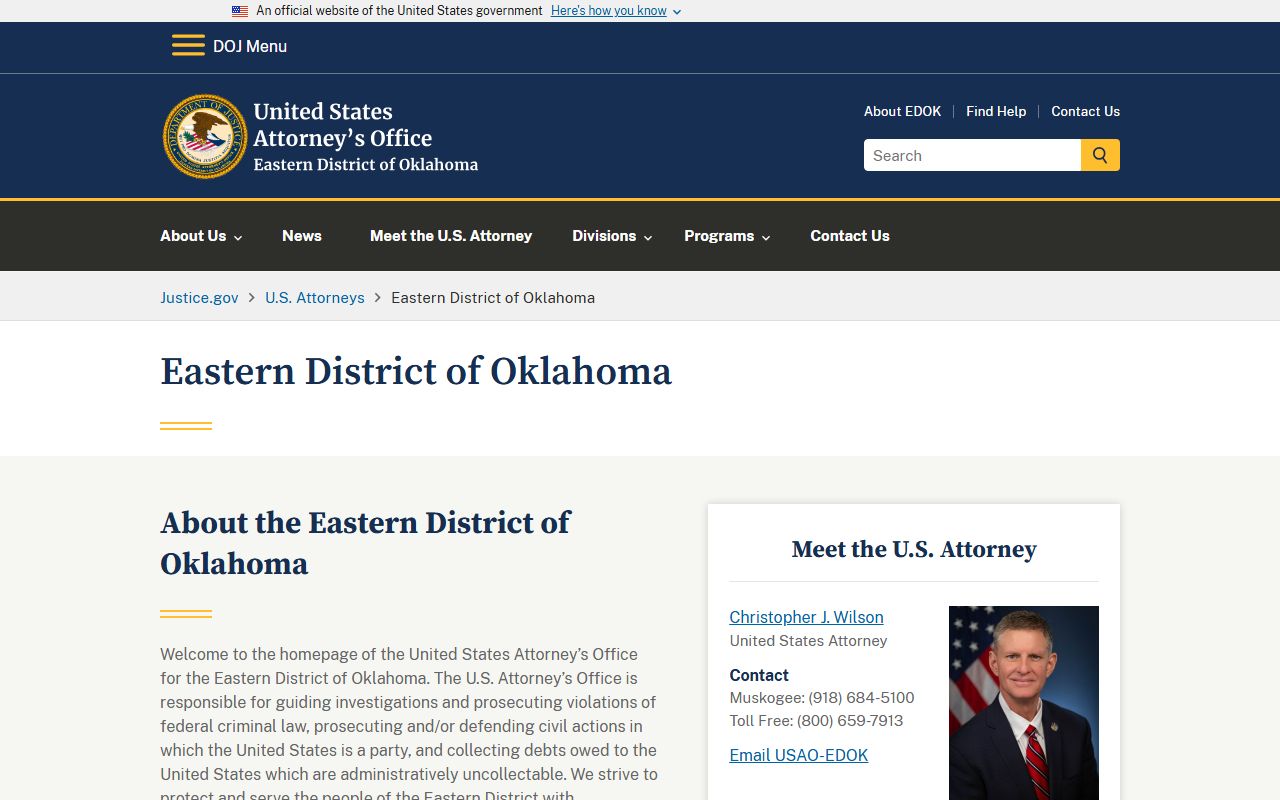
That office prosecutes federal criminal violations, handles civil cases involving the United States, and collects debts owed to the federal government. It is the federal counterpart to the county's District Attorney.
McAlester has its own federal-court history. The Carl Albert Federal Building housed the Eastern District until 2013, as documented by the Federal Judicial Center courthouse history.
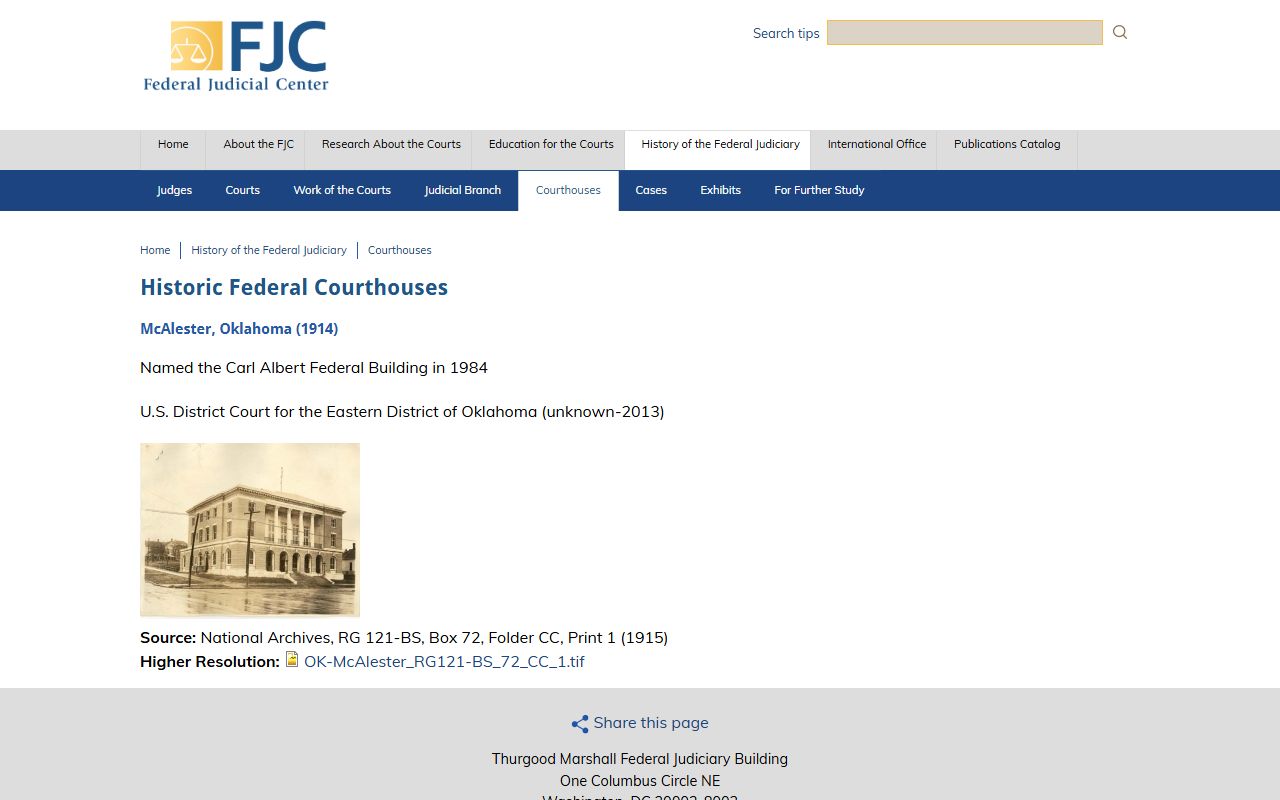
The federal court left that McAlester building in 2013 and now serves the area from Muskogee. The history helps explain why some older federal files and the local District Court records can feel tangled in memory, even though they were always two different systems.