
Checking for a Pittsburg County Warrant
Warrants in Pittsburg County come from judges. A District Court judge can sign a bench warrant when a person misses a court date or fails to follow an order. The Sheriff's Office then serves that warrant and brings the person before the court. The county sheriff also serves arrest warrants and other process ordered by the District Court. A review of the official sheriff website found no public active-warrant search tool. There is no county page where you type in a name and pull up a live warrant list.
Because no single database exists, a warrant check works best as a short chain of steps. You start with court records. Then you move on to the offices that hold the rest. Each source answers a different part of the question, so it helps to know what each one can and cannot show.
- Court dockets - search OSCN or ODCR for events such as "bench warrant issued" or "warrant returned."
- Sheriff's Office - call 918-423-5858 for non-emergency warrant questions.
- Jail roster - check current custody to see if a person has already been booked.
- McAlester Municipal Court - ask about city citation warrants, which sit in a separate system.
- Tribal court - relevant when tribal jurisdiction applies to the case.
- Records request - ask the court clerk or sheriff in writing when the online tools come up short.
Search Court Dockets for Pittsburg County Warrants
The fastest public path is the court docket. Two official systems hold Pittsburg County District Court cases. The first is the Oklahoma State Courts Network, known as OSCN. The second is On Demand Court Records, or ODCR, which the county links for court records. Both let you search by name or case number. When a judge issues a warrant on a case, the docket logs it as an event. You may see lines like "bench warrant issued" or "warrant returned" with a date next to them.
A docket does not always say the word warrant in plain text. Codes such as WA and RETWA can stand for a warrant and a returned warrant. The full case behind a warrant, with the charges and any sentence, sits in the Pittsburg County criminal court records. To narrow a search on ODCR, use the fields below.
| Field Label | Type | Required | Notes |
|---|---|---|---|
| Court group | Dropdown | No | All Courts, Oklahoma District Courts, or Tribal Courts. |
| Court | Dropdown | No | Pick Pittsburg from the list of participating counties. |
| Party name | Text | No | Enter as Last, First. |
| Type of case | Dropdown | No | Includes criminal, traffic, search warrants, and more. |
| Full case number | Text / dropdown | No | Prefix codes such as CF, CM, and TR plus year and sequence. |
| Filed date range | Date | No | Limit results to a span of dates. |
Note: OSCN's traffic citation search covers District Court citations only and does not search municipal citations from city courts.
Types of Pittsburg County Warrants
Not every warrant means the same thing. The label tells you why a judge signed it and what the order asks law enforcement to do. Most warrants tied to local court cases fall into a handful of clear types. Each one shows up in court records in its own way.
- Arrest warrant - a court order that authorizes police to take a named person into custody on a charge.
- Bench warrant - a warrant issued by a judge, most often for failure to appear or failure to comply with a court order.
- Capias - a warrant-like court order directing officers to bring a person before the court.
- Search warrant - a judge's order that lets officers search a place or item for evidence, separate from an arrest.
A failure-to-pay warrant is a common kind of bench warrant. It can issue when a person skips payments on fines, costs, or a payment plan. The trigger is the missed step, not a new crime.
Contact the Pittsburg County Sheriff's Office
The Sheriff's Office serves warrants and District Court process across the county. Staff can answer general, non-emergency questions about how a warrant is handled. Call the office at 918-423-5858 for that kind of help. Do not use the web contact form to report a crime in progress. For an emergency, call 911 instead. No official Pittsburg County Sheriff app was located in research, so do not expect an app-only warrant tool.
You can reach the office through the Sheriff's Office website or its contact page. The contact page explains the emergency and non-emergency routes.
The Sheriff's contact page lays out how to reach the office and when to call rather than write.
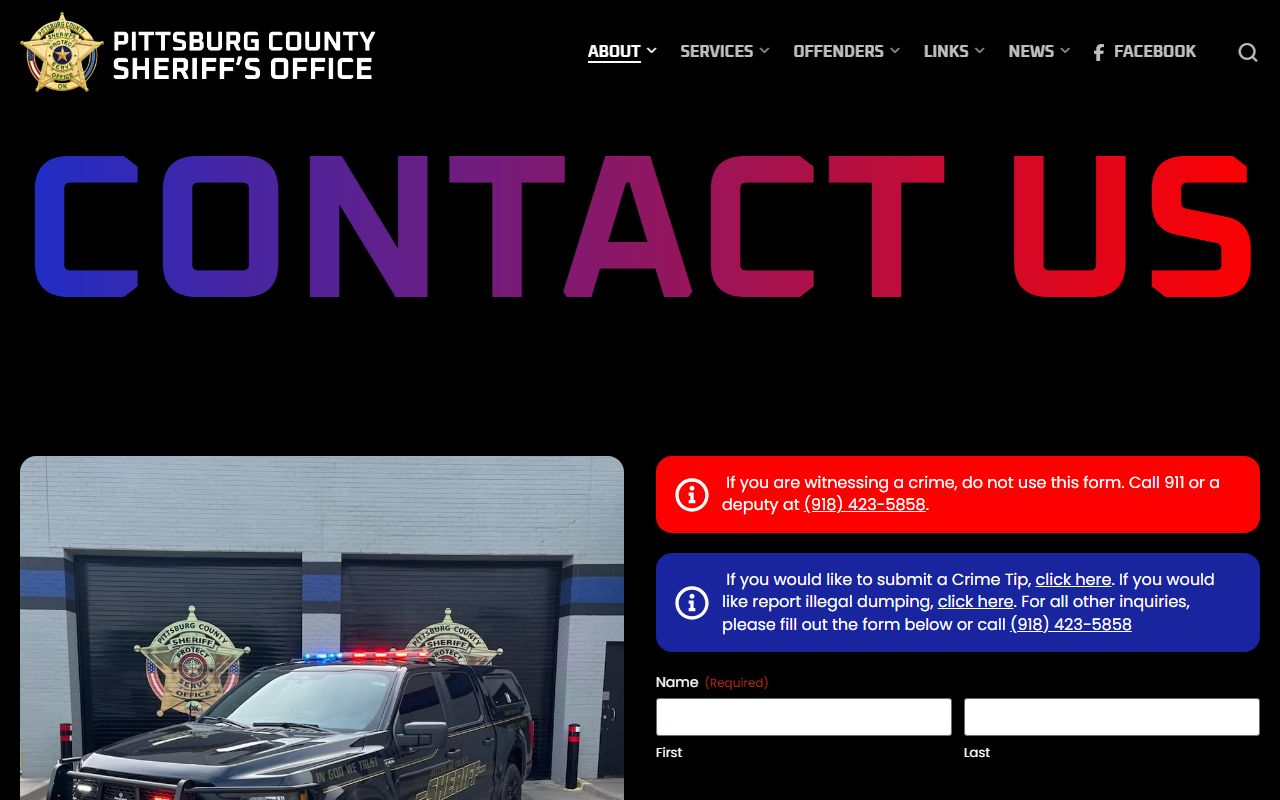
Use the phone line for any time-sensitive warrant question, since the form is built for general messages. The office below is where jail, sheriff records, and administration sit.
Pittsburg County Sheriff's Office
1210 N West St
McAlester, OK 74501
Phone: 918-423-5858
Administration hours: Monday-Friday 8:00-5:00
McAlester Municipal Warrants in Pittsburg County
Not all warrants run through the District Court. McAlester Municipal Court handles city ordinance and city traffic cases. Those municipal warrants sit in the city's own system, apart from the county court file. So a clean OSCN or ODCR result does not always mean a person is clear. A city citation that went to warrant may still be open at the city level.
The city's payment page explains how this happens. If a person sets up a payment plan on a citation that had gone to warrant, missing a payment can trigger a new warrant for arrest. To sort out a city warrant, contact the McAlester Municipal Court. The court phone is 918-421-4939, and the court clerk's office can be reached at 918-423-9300.
The McAlester Municipal Court payment page spells out how city citations and warrant payment plans are handled.
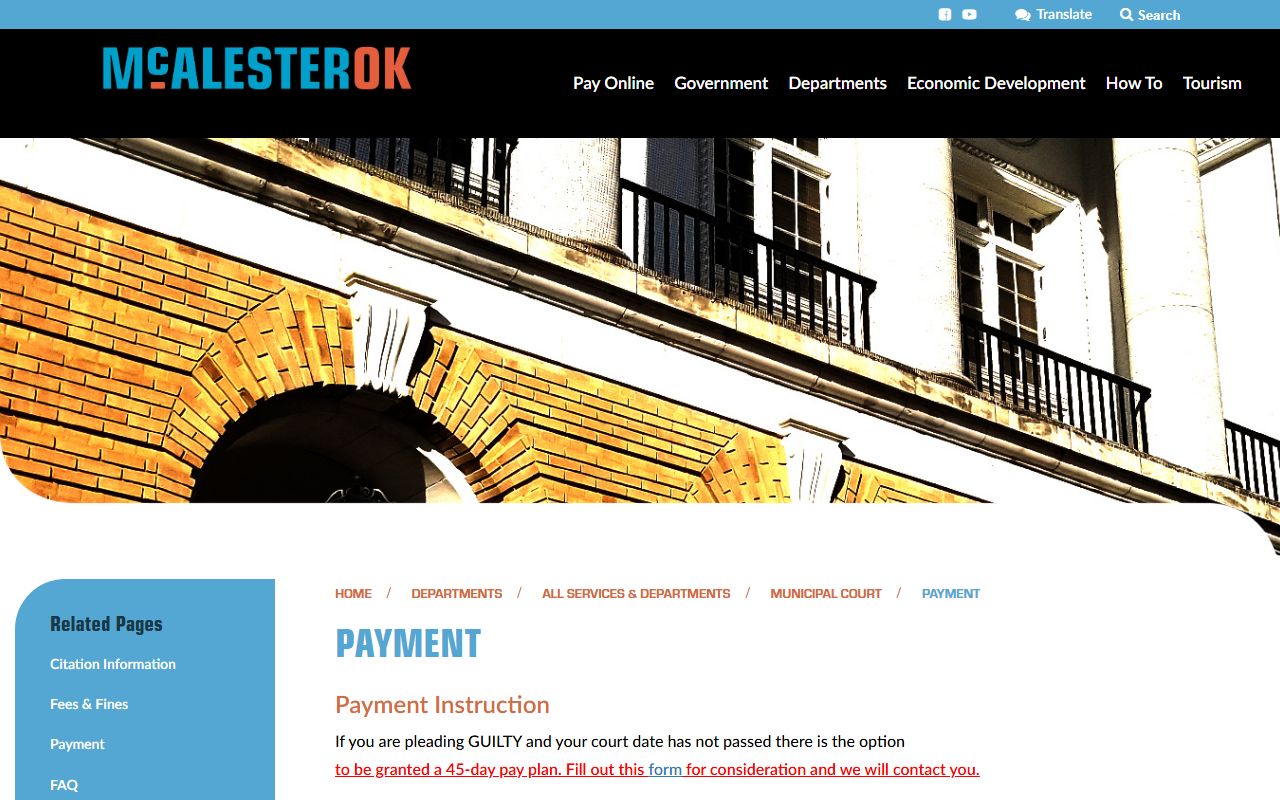
Review the McAlester payment page and the main municipal court page before you assume a city case is closed. Both confirm that city warrants live outside the county docket.
Note: A District Court search will not list McAlester city warrants, so check the city court as a separate step when a citation may be involved.
Pittsburg County Jail Roster Custody Checks
The county jail roster is a useful, fast check. It shows who is in custody right now. If a person has already been arrested on a warrant, that arrest can show up as a current booking. The roster lets you filter by charge to narrow the list.
Still, the roster is not a warrant database. It shows current custody, not open warrants. A person with an active warrant who has not been arrested will not appear there. View the official jail roster for current bookings. For booking detail and how the roster works, see the Pittsburg County inmate records page.
City and Tribal Court Warrants in Pittsburg County
McAlester is not the only city court in the county. Smaller cities run their own courts too. Krebs, for example, publishes a city court calendar and observes a set holiday list that can shift court dates. A warrant from a small city court will not show in the District Court docket.
Tribal court matters add another layer. The Sheriff's court information page lists Tribal Court at 1 PM Monday through Friday and District Court initial appearances at 3 PM Monday through Friday. These times can change on holidays. Tribal jurisdiction matters in this region, so a case may sit in tribal court rather than the county system.
The Krebs court calendar shows how a smaller city court sets its own schedule and holidays.
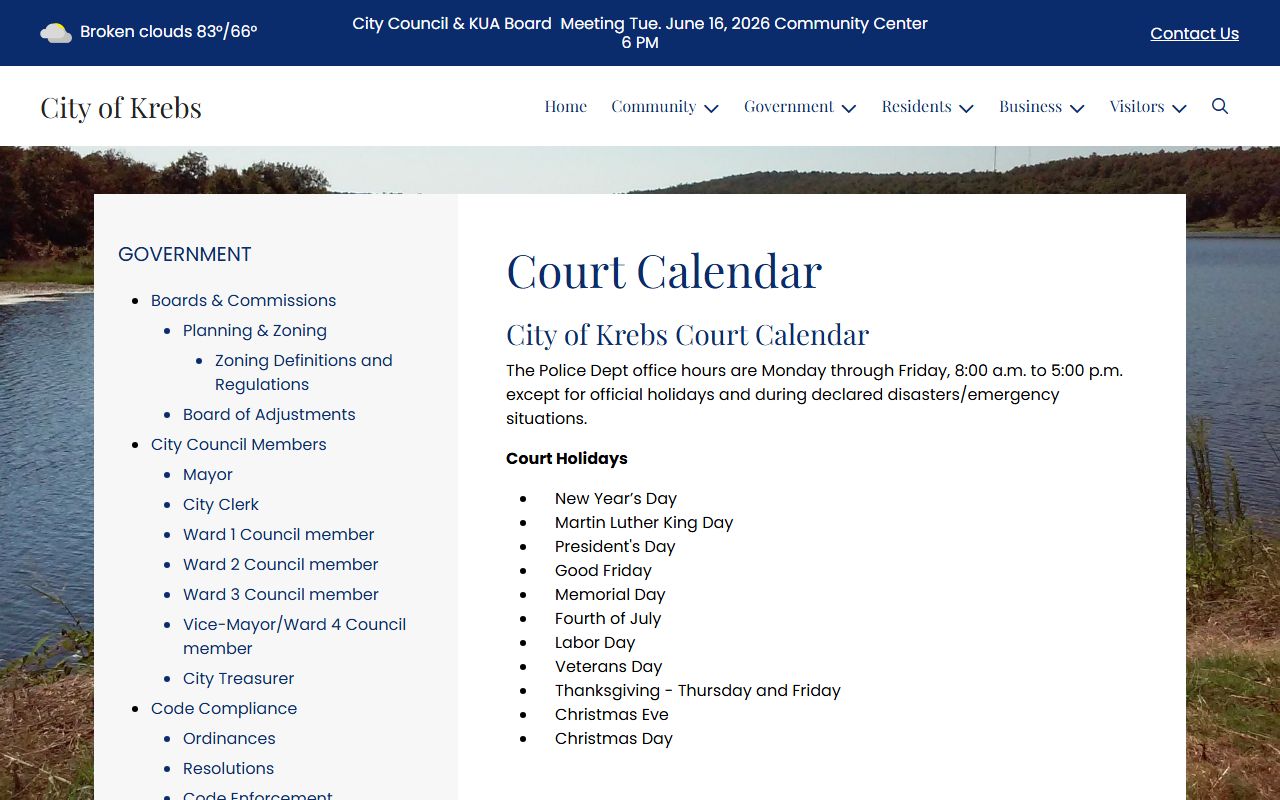
Check the Krebs court calendar and the Sheriff's court page when a case may belong to a city or tribal court. Each holds records the county docket does not.
What a Pittsburg County Warrant Record Shows
Because the warrant detail lives on the court docket, the fields you see come from the case file. A docket entry rarely gives the full warrant page. It does give the key facts. The table below lists what a warrant record can show when you find it on OSCN or ODCR.
| Field | What It Shows |
|---|---|
| Case number | The court case the warrant is tied to, with a prefix, year, and sequence. |
| Warrant type or event | The action logged, such as bench warrant issued or warrant returned. |
| Triggering event | The reason behind it, such as failure to appear or failure to pay. |
| Charge or count and case type | The offense and case category, such as criminal or traffic. |
| Bond or no-bond | The bond amount set, or a note that no bond is allowed, when shown. |
| Issuing court or judge | The court and judge that signed the order, where the docket provides it. |
| Return date | The date a warrant was served or returned to the court. |
Note: Online dockets are a public convenience and not the official record, so confirm any warrant detail with the Court Clerk before you rely on it.
How to Resolve an Outstanding Warrant
An open warrant does not go away on its own. It is better to deal with it on your own terms than to wait for an arrest. The steps below follow the official channels for the county. They help you confirm the warrant, find the right court, and plan a safe next move.
- Identify the court. The warrant may come from the District Court, McAlester Municipal Court, another city court, tribal court, or a court in another county.
- Search the records. Look up your name, citation, or case number on OSCN, ODCR, and the McAlester citation portal.
- Call before you appear. Phone the court clerk or the Sheriff's Office and ask about bond, the court date, any payment plan, and whether counsel should appear with you.
- Handle a payment-plan warrant. If a missed McAlester payment plan caused the warrant, the city says plans on citations that had gone to warrant may now be paid online once the office sets them up.
- Use official channels only. Work through the court clerk, sheriff, municipal court, and the docket portals, and do not rely on a third-party warrant site.
Important: Talk with a lawyer before you turn yourself in, since counsel can arrange bond, plan a court date, and protect your rights at the first appearance.
Restricted Pittsburg County Warrant Records
Not every warrant is open to the public. Some are sealed by law or by court order. A warrant that has not yet been served may be kept quiet so the person does not flee before officers act. In those cases, the docket may show little or nothing until the warrant is returned.
Juvenile matters are confidential under state law and are not searched like adult cases. Sealed and expunged records also drop out of the public view. A person may file to seal a qualifying record under Oklahoma's expungement statutes, found through Title 22 of the Oklahoma Statutes. Once a court grants the order, the clerk and agencies restrict public access.
Federal warrants are another category. They do not appear in county or state court dockets. Those records belong to the federal court system, which keeps its own files apart from the county.
Note: When a record does not appear online, ask the Court Clerk whether it is sealed, restricted, or simply held only at the counter.